


Stop worrying. Here is your complete CSC scholarship guide for 2026. Learn the difference between the grants, and the specific steps.
Key Takeaways (Read this in 30 seconds):
- For Moroccans: You must decide between the “Embassy Route” (Type A) or the “University Route” (Type B).
- The Deal: Fully funded scholarships cover Tuition + Accommodation + Health Insurance + Monthly Stipend ($350–$500).
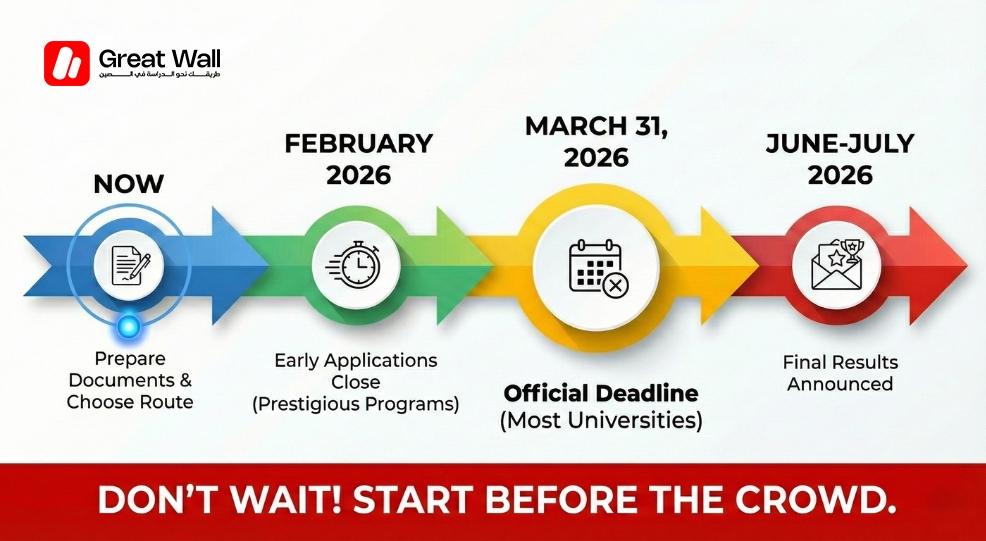
- The Deadline: Applications for China scholarships 2026 close around March 31, 2026.
- The Strategy: Don’t just apply for CSC. “Provincial” and “University” grants are easier to get and often ignored.
magine studying in China and graduating with an Engineering or Medical degree on a fully funded scholarships; zero debt, no tuition fees, free housing, and a monthly stipend deposited straight into your bank account just for attending class.
Introduction: China Wants To Pay To Study
This isn’t a scam. It is the reality for thousands of international students. But the competition is getting harder.
To succeed, you need more than good grades; you need a strategy. This CSC scholarship guide will break down exactly how to hack the system, choose the right path (Type A and Type B scholarship), and secure your seat for the 2026 intake.What is the CSC Scholarship? (The “Golden Ticket”)
The Chinese Government Scholarship (CSC) is China’s most prestigious scholarship for international students studying in China, created to bring outstanding global talent to its universities.
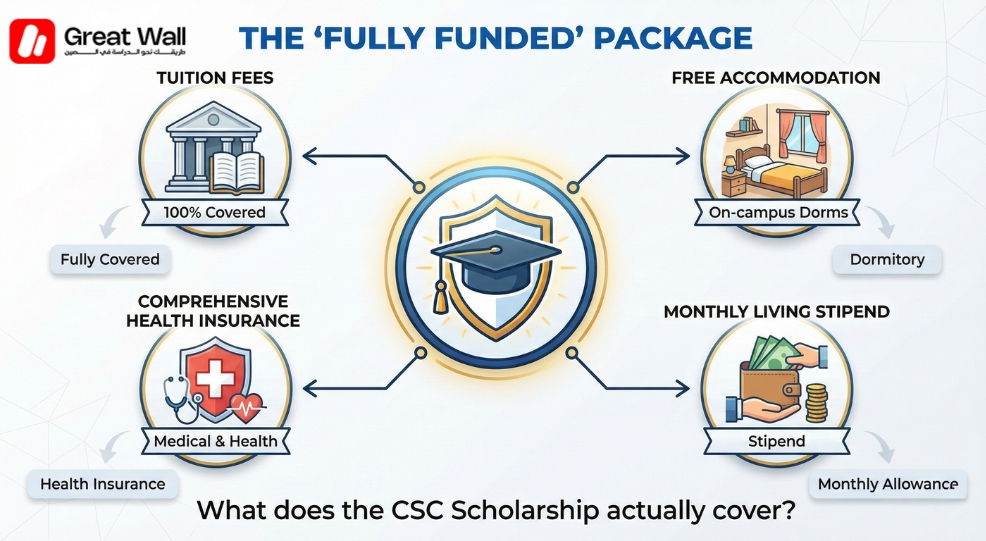
So, what does “Fully Funded” actually mean? Based on Campus China Website (CSC), If you win this grant, you’ll get the followed benefits:
- Tuition Fees: Fully covered.
- Accommodation: Free dormitory on campus.
- Medical Insurance: Comprehensive health insurance.
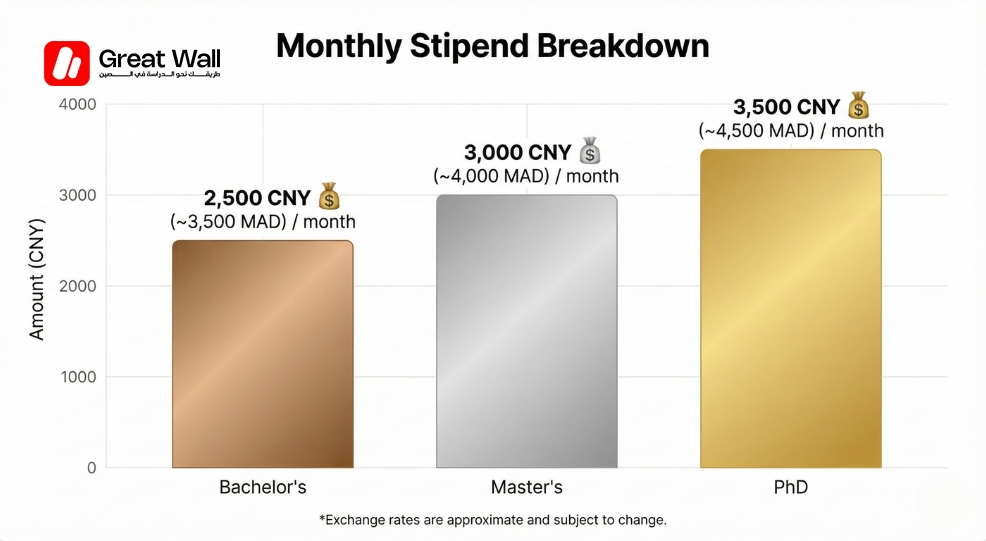
- Monthly Stipend:
- Undergraduate: 2,500 CNY/month. (approx. 3,500 MAD).
- Master’s: 3,000 CNY/month. (approx. 4,000 MAD).
- PhD: 3,500 CNY/month. (approx. 4,500 MAD).
As a matter of fact, most Moroccan students get rejected simply because they apply to the wrong category. You need to understand the difference immediately.
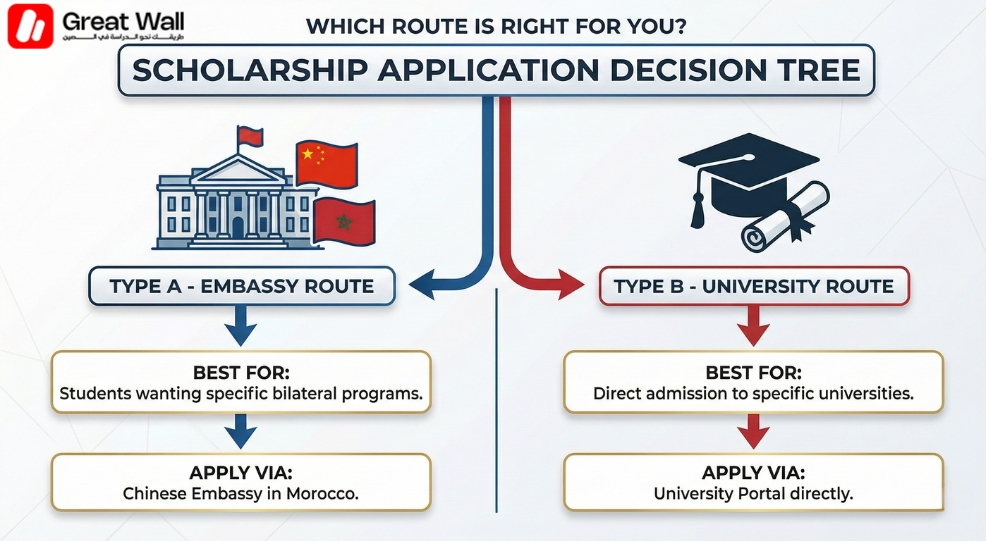
Type A: The “Embassy” Route (Bilateral Program)
This category is for scholarships managed by government exchange programs.
- Where you apply?: You submit documents to the Chinese Embassy in Rabat or through the Moroccan Ministry of Higher Education (Enssup). Or Great Wall Education will take care of this dilemma for you.
- Pros: High prestige, often secures seats in top-tier universities (C9 League).
- Cons: Very competitive. There is a quota (limited seats) for Morocco each year.
- Best for: Students with very high Baccalaureate grades (16/20+).
Type B: The “University” Route (Chinese University Program)
This category allows students to apply directly to Chinese universities that are eligible to enroll CSC students.
- Where you apply: You apply for China scholarship directly to the university via their online portal.
- Pros: More seats available. You can apply to 3 different universities to increase your chances.
- Cons: You usually pay an application fee (400–800 RMB) per university.
- Best for: 90% of applicants. We recommend focusing on Type B.
Note: It is important to check if your chosen university offers the specific major you want under the CSC program before applying.
Skip The Stress: Great Wall Education handles all the paperwork for your study in China journey; including the China visa process for Moroccan students.
This is the secret most agencies won’t tell you. Even, if you miss the CSC, you are not out of the game. There are two other goldmines:
- Provincial Government Scholarships: Take the case of cities like Shanghai, Beijing, and Zhejiang have their own budgets. They often cover tuition and dorms, just like CSC, but usually without the monthly stipend.
- University Presidential Grants: Universities want diversity. They offer their own internal scholarships to attract Moroccans.
Consequently, here is thetThe Strategy that you can follow: When you fill out your application, always tick the box that says “I am willing to accept other forms of scholarships.”
Step-by-Step: How to Apply for China Scholarship
Ready to launch your application for China scholarships 2026? Follow this roadmap to avoid missing deadlines.
- Step 1: The “Hunt” (Nov – Jan) : Choose 3 universities. Don’t just pick “Beijing.” Look for cities with high acceptance rates for Moroccans. Use the CUCAS Search Tool to find programs.
- Step 2: The “Portal” (Feb – Mar) : Create an account on the Campus China website (for Type A) or the university’s own portal (for Type B).
- Step 3: The “Verification” : Ensure your degrees are real. Generally, for China, you may eventually need verification from CHSI (Official Chinese Degree Center)
- For Type A, apply via the dispatching authority in your country.
- For Type B, apply on the university website and the Campus China portal.
- Step 4: The “Medical” : You will need to perform a medical check.
- Step 5: Submit and Wait After submission, universities will review your application. Some may require an interview. Results are typically announced between June and July.
Vital Guide: Don’t go to the wrong doctor. Find approved hospitals in Morocco.
Documents You Need (The Checklist)
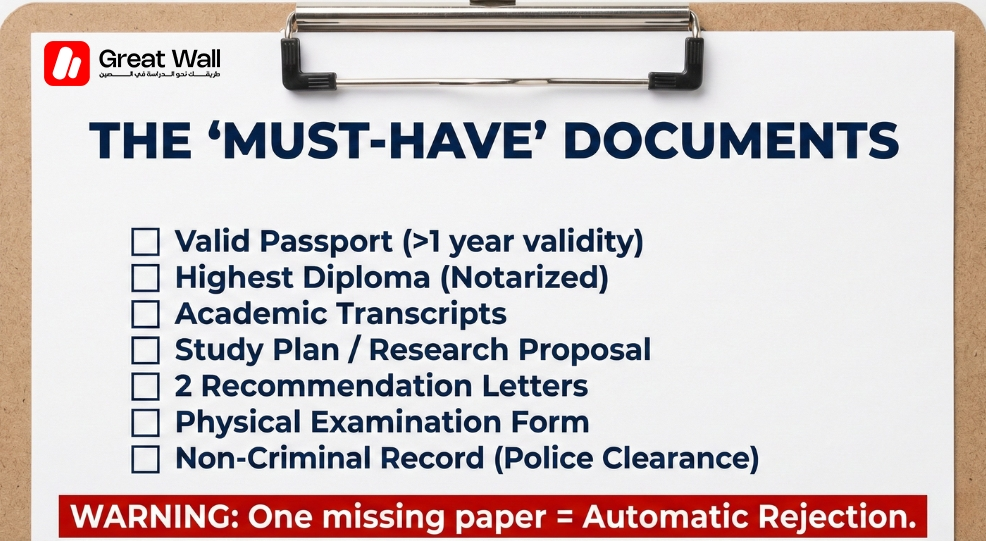
One missing paper = Automatic Rejection. Ensure you have these scanned clearly (NOT with a phone camera).
- Valid Passport: Must be valid for at least one year.
- Highest Diploma (Notarized): High school diploma for Bachelor’s applicants, or Bachelor’s degree for Master’s applicants.
- Academic Transcripts: Complete records of your grades.
- Study Plan or Research Proposal: A detailed letter explaining why you want to study in China.
- Recommendation Letters: Two letters from professors or associate professors.
- Foreigner Physical Examination Form: A medical check record.
- Non-Criminal Record Certificate: Police clearance.
Conclusion: Start Before The Crowd
In conclusion, The window for China scholarships 2026 is opening now. Compared to your friends that might are stressing about French visa rejections, you could be securing a fully funded future in the world’s next superpower.
Don’t wait for the deadline. The early applicants get the attention.
Need a professional review of your application? We have helped 1500+ students secure funding.
Start Your Successfull Adventure With Great Wall Education
Let the experts handle it for you: Great Wall Education manages every bureaucratic requirement for your China study application.
Frequently Asked Questions (FAQ)
Most universities close their applications by March 31, 2026. However, some prestigious programs may close as early as February.
No, many universities offer programs taught entirely in English. However, passing HSK (Chinese proficiency test) levels can strengthen your application.
Yes, you can apply through the Embassy (Type A) and directly to universities (Type B) to maximize your chances, provided you follow the specific guidelines for each.
Generally, applicants for Bachelor’s degrees should be under 25, Master’s under 35, and PhD under 40.
References & Official Sources
In addition, to ensure the accuracy of the information provided in this guide, the following official government sources and regulatory bodies were consulted:
1. China Scholarship Council (CSC)
- Source: Campus China (Official Service Platform for International Students).
- Relevance: Primary source for stipend amounts (2,500–3,500 RMB), coverage details, and university lists.
- URL: https://www.campuschina.org/content/details3_74776.html
2. Embassy of the People’s Republic of China in the Kingdom of Morocco
- Source: Cultural and Educational Office of the Chinese Embassy (Rabat).
- Relevance: verification of the “Type A” (Bilateral) application route and visa policy for Moroccan citizens.
- URL: https://ma.china-embassy.gov.cn/fra/lsyw/fvisa/Demandedevisaordinaire/
3. Ministère de l’Enseignement Supérieur (Maroc)
- Source: Direction de la Coopération et du Partenariat (DCP).
- Relevance: Source for the annual Moroccan scholarship quota and the “MaBourse” application portal integration.
- URL: https://mabourse.enssup.gov.ma/bourse
4. Center for Student Services and Development (CSSD)
- Source: China Higher Education Student Information (CHSI).
- Relevance: The official authority for verifying academic degrees required for university admission.