


Can Moroccan students work legally while studying in China? Yes, but only under strict rules. Learn what’s allowed, what’s illegal, and how to avoid visa cancellation in 2026.
Key Takeaways (Read in 30 Seconds)
- Yes, international students can work in China, but only with formal authorization.
- Legal options are limited to approved internships or on-campus work (勤工助学).
- Teaching English privately is one of the fastest causes of deportation in 2026.
- If your residence permit has no work endorsement, any paid activity is illegal.
- Student work supplements costs; it does not replace scholarships or tuition planning.
Introduction
Many Moroccan students arrive in China assuming they can fund their studies by working part-time; just like in France or Germany.
This assumption is the #1 cause of visa cancellations for international students in China.
So let’s be clear from the start:
Yes, you can work while studying in China, but only under very strict legal conditions.
This guide explains exactly what is allowed, what is forbidden, and what is realistically possible in 2026, without rumors, agent myths, or dangerous shortcuts.
If your goal is to study in China without visa stress, fines, or deportation risk, this article is for you.
Can International Students Legally Work in China? (Clear Answer)
Yes, but not automatically.
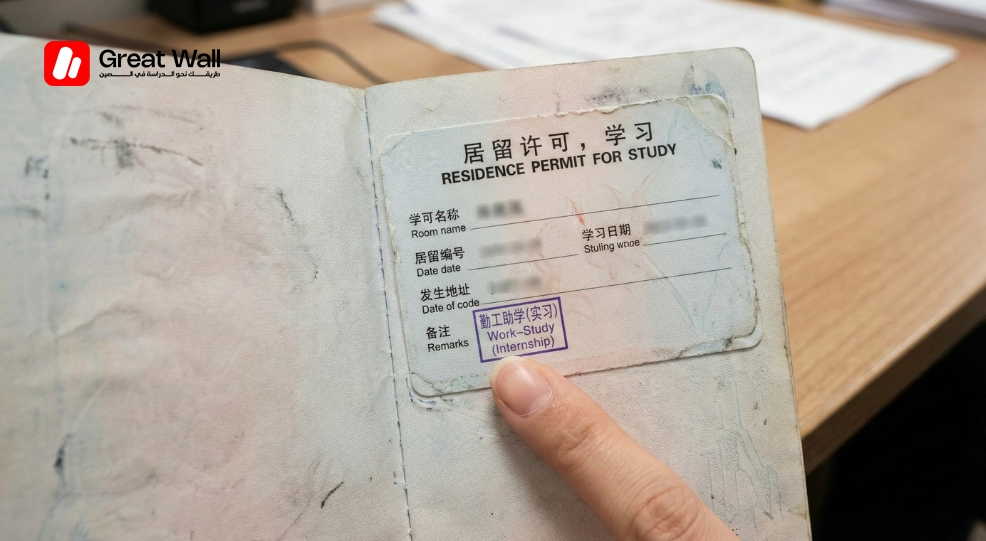
By default, a Residence Permit for Study does NOT allow work.
To work legally, you must receive:
- Written approval from your university, and
- Authorization from the local Public Security Bureau (PSB)
Without both, any paid activity is illegal, even if:
- It’s part-time
- It’s paid in cash
- “Everyone else is doing it”
This applies to all international students, including Moroccans.
What Chinese Law Actually Requires (2026 Update)
Your legal right to work depends on a specific endorsement on your residence permit.
This is critical:
The work authorization is a physical endorsement printed or stickered on your Residence Permit page in your passport.
It specifies:
- Type of work (internship / on-campus)
- Location
- Employer or institution
- Duration
- Weekly hour limits
If your passport does NOT contain this endorsement, you are working illegally, even if you have a contract or agreement.
No endorsement = no legal work.

Legal Ways Students Can Work in China
There are only two safe paths.
1. On-Campus Work (勤工助学 – Qin’gong Zhuxue)
Safest option
Many Chinese universities offer internal Work-Study programs (勤工助学) for international students.
Typical roles include:
- Library assistant
- Administrative support
- Lab or department assistant
- Language or academic support roles
Why this option matters:
- Easier to approve than outside jobs
- Lower immigration risk
- Often managed internally by the university
- In some provinces, PSB procedures are simplified
Pay is modest, but this is the safest “first job” a student can have.
Availability and rules vary by university and city; always ask your International Student Office.
2. Approved Internships (Off-Campus)
Legal if properly registered

Internships are the most common legal form of off-campus work.
Conditions:
- Must relate to your field of study
- Must be approved by your university
- Must be registered with the PSB
- Must appear on your residence permit endorsement
Important note on payment
Legal internships often provide a stipend or allowance (for food and transport), not a full salary.
This is:
- Legal
- Tax-compliant
- Normal in China
Cash-in-hand “salaries” are a major red flag.
An internship is not about money; it’s about positioning yourself for a Work Visa after graduation: How to Get a Work Visa in China as a Moroccan Graduate (2026).
Companies are far more likely to hire graduates they already trained.
The English Teaching Trap (Read This Carefully)
This is the #1 temptation for Moroccan students, and the #1 cause of deportation cases.
Agents often lie and say:
“It’s okay to teach English privately.”
This is false.
Why teaching English is dangerous? :
- Student visas do not allow teaching
- Teaching requires a work visa + qualifications
- Private tutoring is heavily monitored
- Online ads and WeChat groups are actively tracked
Private English tutoring is one of the fastest and most common causes of detention and deportation in 2026.
If someone says “everyone does it,” walk away.
How Much Can Students Realistically Earn?
Let’s be realistic.
Legal student work in China:
- Will not cover rent
- Will not pay tuition
- Will not replace a scholarship
It may help with:
- Food
- Transport
- Phone bills
Because internships rarely pay a full salary, you must rely on smart Student Budget planning. Cost of Living in China: The 2026 Student Budget Guide to cover rent and tuition.
What Happens If You Work Illegally?
Possible consequences include:

- Fines
- Cancellation of residence permit
- Forced exit from China
- Re-entry bans
In many cases, fines are deducted directly from your Chinese bank account or WeChat Pay before removal.
(How To Survive in China (2026): VPNs, Alipay & Banking Guide)
Safer Ways to Reduce Financial Pressure
Instead of risking your visa:
- Apply for CSC or university scholarships
- Choose dormitories over private rentals
- Study in lower-cost cities
- Consider a Foundation Year
- Ask about approved on-campus roles
Planning beats improvisation.
Why Proper Guidance Matters (Great Wall Education)
Chinese student work regulations are complex and often misunderstood.
Most problems don’t come from bad intentions — they come from bad advice.
Great Wall Education helps Moroccan students:
- Choose verified, recognized universities
- Understand visa and residence permit rules clearly
- Avoid illegal work traps
- Navigate internships and post-graduation pathways safely
The smartest strategy is not working more; it’s planning correctly from the start.
FAQs
Yes, but only with university approval and a PSB work endorsement on the residence permit.
Can Moroccan students work part-time in China?
Only in approved on-campus roles or registered internships. Casual jobs are illegal.
No. Private English teaching is illegal on a student visa and often leads to deportation.
It is a physical note printed or stickered in your passport specifying your legal work permission.
Yes, if approved and registered. Most pay a stipend, not a salary.
It’s a legal grey area and can cause problems during visa renewal.
Limits vary by city and are written on the residence permit endorsement.
References & Official Sources
Immigration & Law
- National Immigration Administration of China
https://www.nia.gov.cn - Exit & Entry Administration Law (PRC)
http://www.gov.cn/flfg/2012-07/04/content_2170983.htm
Education Authorities
- Ministry of Education of China
http://en.moe.gov.cn - China Scholarship Council
https://www.campuschina.org
University Compliance
- International Student Offices (Tsinghua, Fudan, SJTU, Zhejiang, etc.)